
Sustainable design
Sustainable decor: 7 criteria for choosing better
Sustainable decor isn't recognised by a green logo, but by seven very concrete details. These are the ones I check before an object is allowed into the shop.
By Lara — published on 2026-06-23
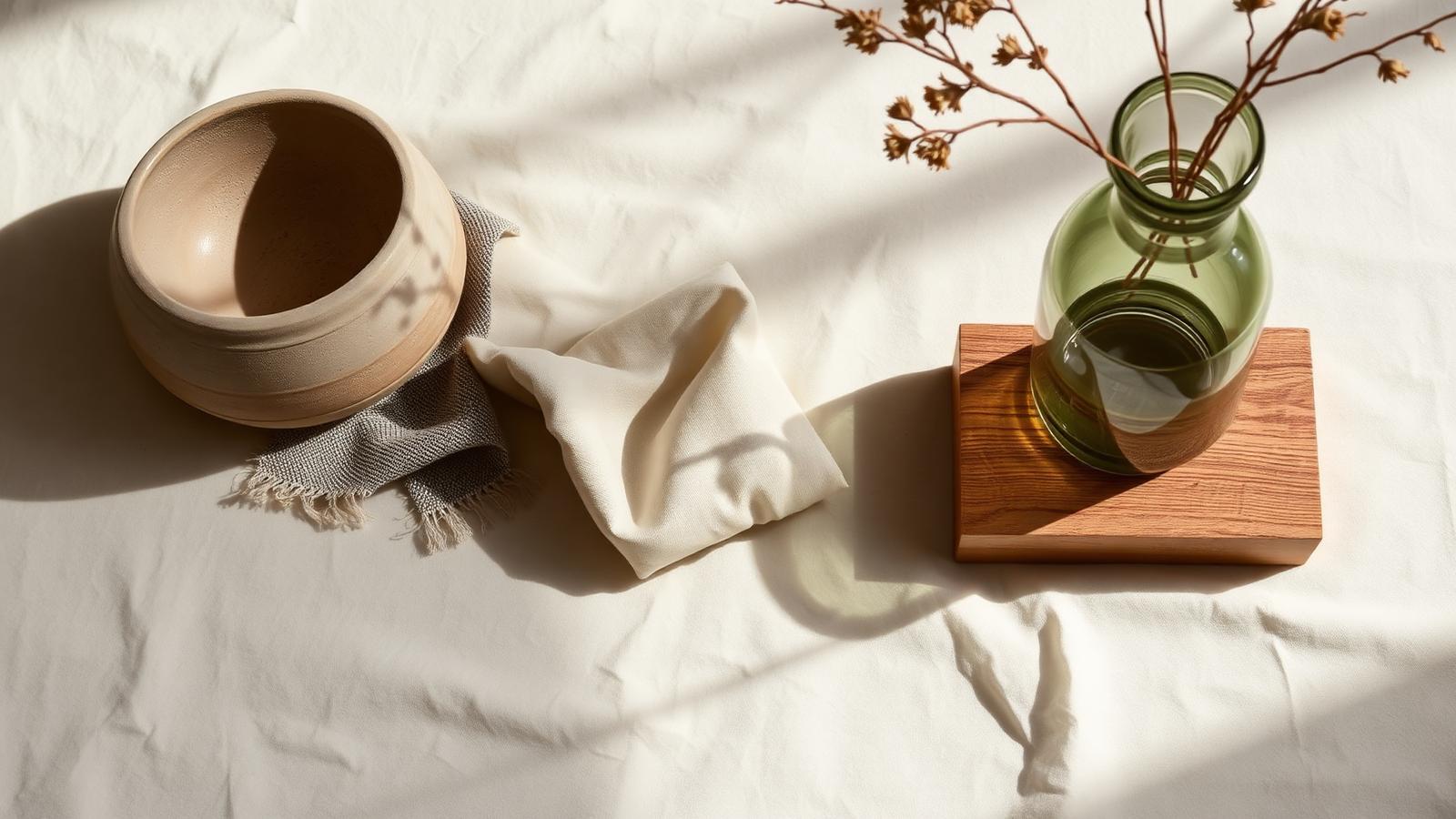
"Sustainable" has become a convenient word, written everywhere, rarely explained. Since I have to choose between two similar-looking objects every day, I've ended up building myself a simple checklist. Here it is, as is.
1. The material is honest
Stoneware, porcelain, glass, solid wood, linen, wool, metal. Materials you can name, that age well, and that are easier to repair or recycle than glued-together composites.
2. You know who made it
A workshop, a region, sometimes a first name. When no one can tell me where an object comes from, there's usually not much interesting to say about it.
3. The distance is reasonable
I favour Belgium and Europe. It's not a dogma, it's common sense: less transport, clearer working conditions, and the chance to actually visit the workshop.
4. The object is genuinely used
The best environmental criterion is still use. A vase used every week beats a decorative object you tire of within three months.
5. It can be repaired, replaced, recharged
A rechargeable diffuser, a piece whose broken part can be bought again, a candle whose vessel can be reused: end of life is part of the design.
6. It outlasts trends
Simple shapes, colours that go with what you already own. A sustainable object is also one you'll still want to look at in five years.
7. The price says something
A fair price pays for a material, working time and craftsmanship. Too low, and someone is paying in your place — often the person who made it.
Better to buy one object once than replace three cheap versions one after another.
Frequently asked questions
- How do I recognise genuinely sustainable decor?
- Check the material, the origin, whether it can be repaired, and how much the object is actually used. These four points say more than any marketing claim.
- Does sustainable decor cost more?
- Often yes, upfront. Over time, rarely: a well-made object needs replacing far less often.
- Can sustainable objects be mixed with furniture I already own?
- Yes, and that's really the idea. Sustainable decor adds to what you already have rather than replacing it all at once.
To go further