
Tableware
Artisan tableware: how to choose your pieces well
Stoneware or porcelain, a set or a one-off, dishwasher-safe or not? What to check before buying artisan tableware.
By Lara — published on 2026-07-14
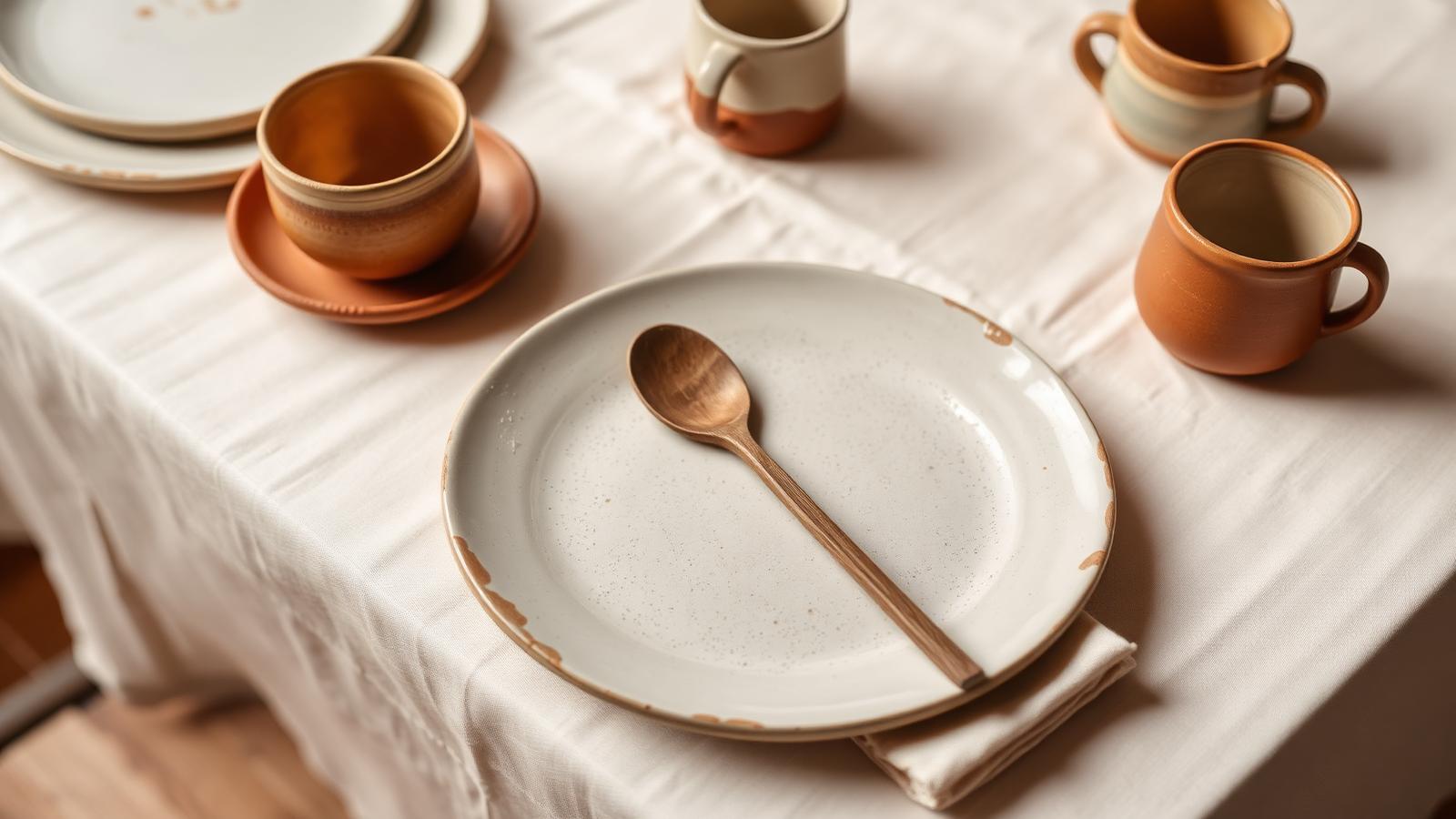
An artisan table isn't a perfect table. The pieces are never quite identical, and that's exactly what makes them beautiful. What matters is choosing the ones that will actually live in your home, not just come out on Sundays.
Stoneware, porcelain, earthenware: choosing the material
Stoneware is fired at high temperature: dense, hard-wearing, warm to the eye, and up to daily use. It's my favourite material for plates you'll use every day.
Porcelain is finer and more luminous, very elegant but more prone to chipping. Earthenware, more porous, is better kept for decorative or serving pieces.
The practical questions to ask
Dishwasher, microwave, oven: always ask. Some glazes and gilded decorations can't take them.
Also ask whether the range can be added to later. A lovely table is often built up over time.
Mixing without matching everything
Keep a neutral base — plain flat plates — and vary the bowls, cups and small dishes. It's livelier, cheaper, and leaves room for pieces you simply fall for.
Two or three tones that talk to each other are enough: an ivory, a terracotta, a darker glaze for contrast.
Caring for it over time
Avoid sudden temperature shocks, stack thin plates with felt between them, and don't worry about small irregularities: they're part of the piece, not a flaw.
Frequently asked questions
- Is artisan tableware dishwasher-safe?
- Often yes for glazed stoneware, more rarely for gilded or delicately glazed pieces. The rule is to ask piece by piece.
- Should I buy a full set at once?
- No. Start with the pieces you'll use every day and build from there; it's easier on the budget and truer to how you actually live.
- Why do two plates of the same design differ slightly?
- Because they're thrown and glazed by hand. Variations in tone and shape are the signature of a handmade piece.
To go further